


“Courage, my friends; ’tis not too late to build a better world.”
– Tommy Douglas
Almost everyone coming into therapy says, “I want to learn better Communication tools!” But what exactly are these tools? What tools do good communicators have in their toolboxes? What tools help us face rage, addiction, depression, or other forms of sorrow?
In short: What tools are in the Good Life Toolbox?
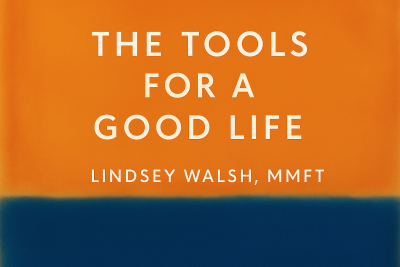
This book (in progress) is about answering those questions. Together we will figure out what tools you have, what tools you need, and what tools you didn’t even know were available to you. And, oddly enough, the very act of assembling the Toolbox helps us learn how to use some of them. The more we use the tools, the more naturally they fit in our hands, and the more readily we reach for them when we are in need.
While we can’t master all of the tools, it does seem to me that together we — you, me, my friends, family, and clients — can identify and become proficient with many of them.
We can also make our quest highly creative and tangible by thinking of real-world equivalents to emotional, intellectual, and spiritual tools. For every emotional, intellectual, or spiritual tool like Compassion, Curiosity, or Grace, there must be a real-world object that is similar — something we can hold in our hands, something we use to make the world better, to find joy, to soothe our loved ones.
So that’s the next question this book explores: What real-world tool is most similar to Compassion, Curiosity, Grace, or the other tools in the Good Life Toolbox? It’s a question I’ve had a lot of fun with in conversation over the last couple of years. And the good news is that by asking the question, we practice using the tools themselves (in this case: Curiosity, Flexibility, and stick-to-itiveness).
Not all of the tools are comforting. Life can be gross and sticky and sometimes you end up with a sore nose and an iron taste in your mouth. So a couple of the tools in this book will reflect that reality (I promise to keep everything PG-rated).
One last note:
Just like real-world tools — hammers, screwdrivers, wrenches — all of the emotional and intellectual tools are available to us. All of us. And just like real-world tools, they can feel awkward or difficult to use at first. Luckily, with practice and a lot of help and guidance, we can learn how to be more Compassionate, Gracious, or Resilient.
And before I go, a request:
Using these tools requires an open mind and a spirit of play. It might seem absurd to call a Cradle (or a wad of Kleenex) a “tool,” but when I looked in my Toolbox, nothing in there looked much like Compassion or Resilience to me. So I’m going to ask that you roll with me on some of these metaphors. And, of course, I hope you’ll be inspired to imagine and assemble your own Good Life Toolbox as you read.